 Design by Allure; Source images: Getty ImagesSave this storySave this story
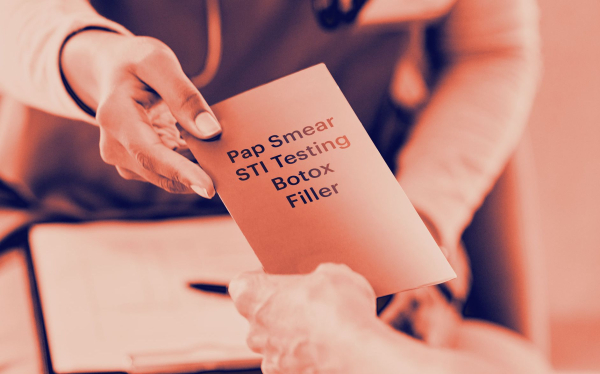
File this under news I never thought I’d see. This week Planned Parenthood Mar Monte—the largest affiliate of the national sexual and reproductive healthcare provider, with locations across mid-California and Northern Nevada—announced a new strategy for closing its massive $100 million dollar revenue gap left by federal budget cuts. They would start offering Botox. Also, IV drips and soon, according to an exclusive story in the Wall Street Journal this week, fillers and laser hair removal.
Stacy Cross, the president and CEO of Planned Parenthood Mar Monte, told the newspaper that the services are an attempt to keep the doors open at their remaining 30 clinics. (Last year, the affiliate closed five clinics, laid off 15% of its staff, and shuttered its family medicine program.) Cross acknowledges that there is ample competition in the aesthetic medicine space. As Allure reported in a recent monthslong investigation, there are currently almost as many med spas in America as there are McDonald’s locations, with the industry continuing to grow exponentially. In many regions of the country, you’re never far from easy-access, and potentially discounted, Botox (or filler or laser resurfacing). The prices at Planned Parenthood are hard to beat though, because they don’t have the same profit-margin expectations. At $9 per unit, Botox at the Planned Parenthood in Sacramento is 25% less than what’s advertised nearby, according to the Journal. And the revenue stream is appealing to Planned Parenthood for the same reason it's appealing to med spa entrepreneurs: Patients pay cash—no insurance headaches or billing issues.
Planned Parenthood is vulnerable when beholden to a federal government that's shown disregard for the needs of women's bodies.
To be honest, the Botox of it all may be the least surprising part of this announcement. The neuromodulator brand has become a noun, a verb, and a cultural lynchpin. Something that is a mundane part of our routine, like desk salads and Pilates classes and no-foam lattes. A treatment once reserved for the confines of a doctor’s office is now very widely available; you can even address those 11s after dropping $20 on a single strawberry at Erewhon. It’s become so pervasive in our culture that, thanks to TV commercials and subway advertisements, my daughter already knows what Botox is; she’s 7.
Planned Parenthood leaning into Botox isn’t just a reflection of its ubiquitousness, it’s an indication of the health care provider’s dire financial situation. Last October, Planned Parenthood closed its flagship (and sole) Manhattan location, which had been providing services from a stately brick building on Bleecker Street for 36 years. That was just one of more than 50 Planned Parenthood clinics that closed across the country in 2025. And while the abortion discussion is often divided down party lines, those closures were not: They happened in both red and blue states. Though the overturning of Roe v Wade in 2022 resulted in widespread abortion restrictions and bans, terminating a pregnancy (with some restrictions) remains legal in many states, New York included.
For Planned Parenthood, lack of need is certainly not the issue: According to a poll released last year, one in three women, and half of Black women, have gone to a Planned Parenthood clinic for care. I don’t know what I would have done without my Commonwealth Avenue location when I was in college in Boston. And at least four in 10 individuals with Medicaid receive services at Planned Parenthood. Last summer, Republicans in Congress passed a provision as part of Trump’s cruelly named One Big Beautiful Bill Act to strip Medicaid funding from Planned Parenthood centers in 22 states and Washington DC. After some legal flurries, a U.S. appeals court upheld the order in December. One third of Planned Parenthood’s revenue comes from state and federal government funding, including Medicaid; the rest is from out-of-pocket payments and private donors.
In recent years, Planned Parenthood has faced not just a funding problem, but an image problem. And not just on the right. As New York Magazine reported in January, many abortion rights activists have taken umbrage with the organization’s approach to maintaining political power by supporting some politicians who don’t rally for abortion rights. They’ve also been disappointed that Planned Parenthood hasn’t pushed back against the passage of hostile laws, and has resisted mailing medication abortion to states where there were bans. The Guttmacher Institute reported that medication abortions accounted for 63% of all US abortions in 2023, and, according to #WeCount, in the first half of 2025, 27% of medication abortions were arranged via telehealth. But while Planned Parenthood has become synonymous with abortion and the debate around it, the organization has continually shown in their annual reports that abortion makes up a tiny percentage of the overall health care services it offers. The vast majority focus on STI testing and treatment, contraceptive services, and cancer screenings.
If anyone is going to benefit from our allegiance to the lineless forehead, I'd rather it be Planned Parenthood than Erewhon.
Planned Parenthood may be, comparatively at least, a health care behemoth, but the last few years have brought into sharp focus that it's just as vulnerable as those of any other clinic when we are beholden to the impulses of a federal government that has shown an utter disregard—often disdain—for the needs of women’s bodies. For all its organizational issues, Planned Parenthood remains—particularly in underserved communities—a vital resource.
Which brings us back to the Botox of it all. The bigger picture is impossible to neatly filter: that access to affordable healthcare must be paved with cosmetic enhancements is depressing. Chiefly because of what it reveals about our collective value system: The commodification of beauty trumps everything else. I’d sure love to live and raise my daughter in a country where preserving women’s health care is as important as preserving our appearance. But, if anyone is going to benefit from our allegiance to the lineless forehead, frankly I would rather it be Planned Parenthood than a med spa or Erewhon.